
Hiring a mover in Federal Way, WA means trusting a stranger with everything you own. That trust is not left to chance in Washington State. The Washington Utilities and Transportation Commission (WUTC) regulates every household goods carrier operating within state lines, and understanding those rules helps families, renters, and businesses spot a legitimate mover before moving day. We put this guide together to walk you through how licensing works, what it protects, and why it matters to anyone planning a move in South King County.
Why Washington Regulates Household Goods Movers
Household goods carriers are companies that transport personal belongings, furniture, and business equipment for a fee. Washington places these carriers under the WUTC’s authority through RCW 81.80, the state’s motor freight carrier law, and WAC 480-15, the detailed rule chapter governing household goods operations specifically. Together, these regulations exist because moving is uniquely vulnerable to abuse: a company can hold someone’s entire household hostage over a payment dispute.
The WUTC’s oversight prevents that scenario by requiring every legally operating mover, us included, to carry a state-issued permit. According to the commission, permitted carriers must charge fair and proper rates, maintain adequate insurance, and keep their vehicles in safe operating condition. That framework gives Federal Way residents a backstop that unlicensed operators simply don’t offer.
Getting Licensed: What the WUTC Requires of Movers Like Us
Earning a household goods permit is not a rubber-stamp process, and we went through it ourselves. Applicants submit a formal application to the WUTC, and while a complete submission is often processed the same day, state rules impose a 30-day minimum waiting period before the commission grants provisional operating authority. That waiting period gives the commission time to verify the applicant’s qualifications and flag any red flags in advance.
Training adds another layer of accountability. Every individual named on our application had to complete the commission’s household goods training course before we received our permit. That requirement ensures the people running a carrier, not just the business on paper, understand their legal obligations to customers.
Licensed carriers must also operate under an approved tariff, a formal schedule of rates, terms, and conditions filed with the state. We operate under Household Goods Tariff 15-C, the standard most Washington movers use, so customers can compare estimates on equal footing. A carrier that quotes wildly outside these published terms is worth a second look.
Insurance and Valuation Coverage: Protecting Your Belongings
Licensing also obligates carriers, us included, to maintain public liability, property damage, and cargo insurance. Without it, a customer whose belongings are damaged in transit would have no reliable path to compensation. We file our insurance documentation with the commission electronically, giving regulators an ongoing record of our financial responsibility.
Estimates: Binding vs. Non-Binding
Washington law also shapes how we’re allowed to quote a job. A non-binding estimate allows the final bill to rise, but state rules cap that increase at 25% above the original quote. A binding estimate, by contrast, locks in the price regardless of how the job unfolds. Either way, we put every estimate in writing and pair it with an inventory list and a bill of lading, the document that functions as your binding moving contract.
Valuation coverage is a separate protection worth understanding before your items leave the house. Basic coverage reimburses damaged goods at $0.72 per pound at no extra cost, while full replacement value coverage costs more but pays out based on actual item value, with or without a deductible depending on your chosen option. Jewelry, live plants, and items you pack yourself are typically excluded unless negligence on the carrier’s part caused the damage.
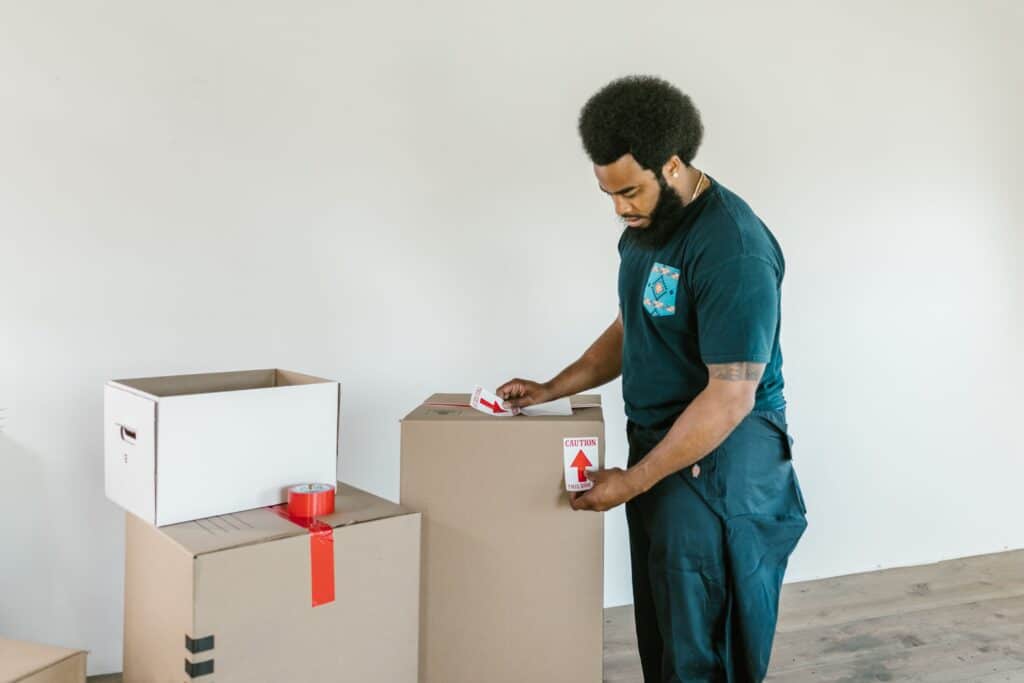
Image credit: RDNE Stock project from Pexels
What This Means If You’re Moving in Federal Way
South King County sits along a busy relocation corridor between Tacoma and Seattle, which means households throughout Federal Way and nearby communities regularly hire movers for both local and long-distance jobs. Before signing anything, you can look up a company’s permit status directly through the state’s carrier database to confirm the business is authorized to operate. An unlicensed mover carries no obligation to follow tariff pricing, valuation rules, or claims procedures, which leaves customers with far less recourse if something goes wrong.
The permit requirement applies specifically to moves within Washington State. If your relocation crosses state lines, say from Federal Way toward Oregon or Idaho, federal rules take over, and it’s worth checking FMCSA’s mover protection resources to confirm interstate carriers meet their own standards. Knowing which agency governs your move helps you know where to turn if a dispute arises.
If a problem does surface, Washington gives consumers a defined path forward. Claims for loss or damage must be filed in writing within nine months of delivery, and the carrier has ten days to acknowledge it. Storage-in-transit is capped at 90 days before it converts to permanent storage, and storage inside the moving vehicle itself is limited to 15 days unless both parties agree to extend it. These deadlines exist so a dispute never lingers indefinitely.
Let New Horizons Moving Guide Your Federal Way Move with Confidence
Understanding Washington’s household goods carrier rules should make choosing a mover easier, not more intimidating. We built New Horizons Moving around exactly the standards this article describes: proper licensing, transparent estimates, and the insurance protections Federal Way families and businesses deserve. Whether you’re relocating a home or apartment or an entire office or commercial space, we handle packing, loading, unloading, furniture moving, and specialty item transport with the same accountability the state requires of us.
We want every client across Federal Way and the surrounding area to feel confident from the first estimate to the final box. Take a look at our moving tips for more ways to prepare, and if you’re planning a local or long-distance move and want a team that takes licensing and compliance seriously, get in touch with us and let’s talk through what your move actually needs.